As the naira continues depreciating everyday, this is the right time to start exportation business because earning in foreign currencies will put you ahead of the current Naira’s lower purchasing power.
One of the many ways by which a country boosts its economy and grows its GDP is by the exportation of goods and services to other countries.
Export business in Nigeria has grown considerably over the years. This is because, Nigeria is a country that is blessed and rich in natural resources and these resources help provide revenue. These resources include Natural Gas, Tin, Coal, Limestone, and many more.
Also, Nigeria is a land which is very fertile therefore many species of agricultural produce which cannot be easily obtained in other countries are found to be growing here. These agricultural produce are essential foods which people eat or convert into other products which are then sold to consumers for consumption.
There is no better time to start export business in Nigeria than now. Covid-19 pandemic has even brought more opportunities for the demand of African products, making it easier for smart exporters to make money exporting. The recent signing of the African Continental Free Trade Area (AFCTA) by the African Union has even made it easier to export within Africa without much hassle.
The demand for African foodstuffs in Europe, America and Canada (Diaspora) is fast rising due to the increasing population of Africans in this country, especially Nigerians who immigrate for work and for the purpose of schooling. These people crave and want the undiluted taste of their home food after all there is the saying that goes “ There is no place like home” . These people miss their culture and so, therefore, find means of being familiar with that which is by eating the Nigerian food they can find in the diaspora. This is where food exporters come in.
Food exporters export Food Produce to retailers running ethnic shops and consumers in countries such as the US, Europe and Canada. Food export business is infact very profitable because of the demand for African food abroad. The volume of Nigerian export of foodstuffs to these countries is still on a very small scale considering the estimation of well over 20 million Nigerians who reside outside the country, with the majority, living in the UK, the US and Canada. This is an excellent chance to sell to this category of people. You can also tap into this money market by going into the export business as it helps generates huge amounts of income.
First thing you should know is that few African food exporters cannot meet the demand of Nigerians abroad, whose population is growing by the day. Market is ever growing with more Nigerians moving abroad daily.
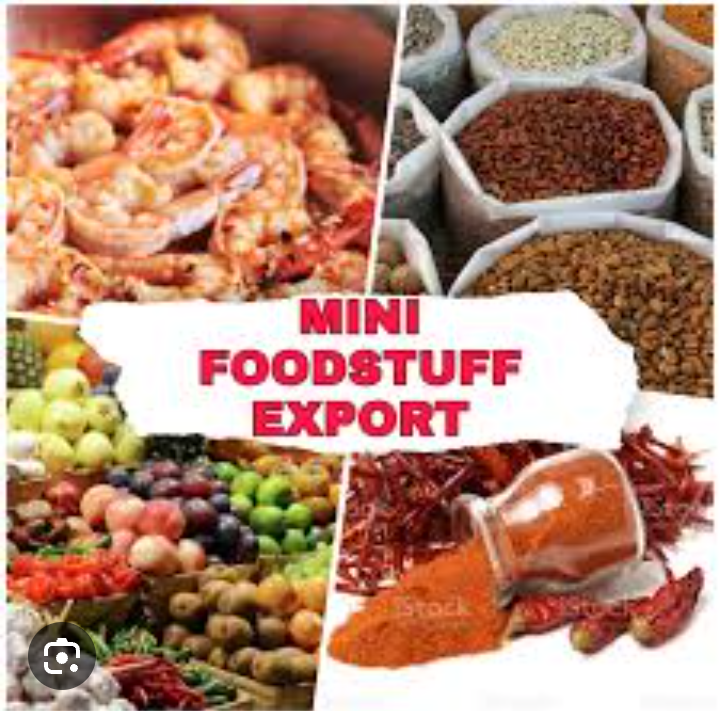
Among the many exportable foods are smoked fish, corn flour, garri, beans flour, melon seed, ogbono, cassava flour, bitter leaf, ukazi, dried pumpkin leaf, palm wine, butter production, groundnut, coconut processing, pepper, tomato paste, hibiscus flower, processed bitter kola, yoghurt, pap, other vegetable leaves, and hot chilli pepper.
Some Nigerians and Africans who run African shops in other countries are looking for food distributors, which makes the business very lucrative.
In Exporting Foodstuffs From Nigeria to other countries, there is a lot of opportunities abound, but only a few have taken advantage of it.
The Process of exporting foodstuffs From Nigeria to another country
can be broken down into a few key steps
Register Your Business:
Register your business name or private limited company with the Corporate Affairs Commission in Nigeria and with the National Export Promotion Council for an export license. This is done to legalize your business and avoid any legal issues that might pop up. It provides a platform for potential buyers to source for information on reliable exporters. Also, it acknowledges the exporter’s license and also portrays the interest of Nigerian sellers before buyers in diaspora.
Source for Direct Producers and Suppliers:
This is an important step because it is where your produce will come from. Search for the producers or suppliers of the goods you intend to export. If you can meet the demand rate of your customers, then you can produce and supply items by yourself. But if not, Establishing a link with other producers and signing a deal with them will work. You can begin by visiting the production site of these goods you want to export or find a way to discuss with the farmers of products to be exported. Verify that all products are of high quality. The better the quality, the more consumers will patronize you.
Pricing your Product
To put the right price on your product, you must calculate all expenses, do a market research and analysis on how much the product is being sold, how much consumers and retailers are willing to pay and the rate of demand of the product. These details will help you determine how to price your product.
Research the country food market and develop a list of potential buyers:
Before you can start exporting your product, you need to carry out some market research to develop a list of potential buyers.
There are a number of ways you can go about conducting your research, such as:
Searching online for importers, distributors, or wholesalers of food products.
Checking trade directories such as the Trade Finder.
Attending trade fairs and exhibitions
Once you have compiled a list of potential buyers, you should then research each one individually to find out more about their business and what they are looking for in a supplier. This will help you to tailor your approach when you come to making contact with them.
Choose the right products to export.
Every market is different, and each one requires a different export strategy. The products you choose to export should align with your company’s strengths and the opportunity in the target market.
To select the right products, you’ll need to consider the following:
The products you plan to export should have high demand in the target market.
The products should be unique and differentiated from the competition.
It should be ones that your company can produce efficiently and at a high quality.
By taking the time to carefully select the right products, you’ll be setting your company up for success in the export market.
What Food to Export Out Of Nigeria
There are several agricultural produce in Nigeria which are in high demand in other countries.
Like, Honey, Ginger, Cassava Flour
Sesame Seeds, Garlic, Palm Kernel Oil
Cashew Nuts, Snail and many more.
Prepare your goods for export.
There are a few things you should do to prepare your goods for export.
First, you need to find out which export markets are open to you and what the requirements are for each market. Once you’ve done that, you can start thinking about packaging and labeling your products for export. You’ll also need to make sure that your products meet all relevant safety and quality standards.
Preparing your goods for export can seem like a daunting task, but with a little planning and research, you can make sure that your products are ready for the global market.
Obtain the necessary export documentation in Nigeria:
Nigerian businesses exporting products or services will need to obtain the necessary export documentation. This includes obtaining an export license from the Nigerian Export Promotion Council (NEPC) and registering with the Nigerian Customs Service (NCS).
In order to obtain an export license from the NEPC, businesses will need to submit an application along with the required supporting documents. These documents include a business registration certificate, a company profile, and a product registration certificate.
Depending on the type of business you are running, you may need to register with the Corporate Affairs Commission, the Nigeria Customs Service, or the Nigeria Immigration Service.
Ship your export goods.
At this point, you need to find a shipping company that can ship your export goods. This is where we recommend using a qualified Freight Forwarder. Once your goods arrive, you’ll need to clear them through customs.
Have your goods delivered to your final destination
This is where it gets more interesting as you would require the full engagement of a qualified freight forward.
Document Required for Commercial Export Goods from Nigeria
You must obtain the documents indicated below if you wish to work full-time in the exportation of foods or any other processed or unprocessed goods.
Bill of lading
Certificate of origin
Commercial invoice
Single goods declaration (SGD)
Nigeria export proceeds (NXP) form
Clean certificate of inspection (CCI)
Packing list
After shipment, documents need to be presented. The time frame for export processing has been shortened to 48 hours, which also depends on the readiness of all your documentation. The documentation requirements for FORM M and NXP processing remain the same.
However, if you only want to make a small investment, you might not need to go through this lengthy initial process, but you should have someone who will receive your items from abroad.
Starting an export business in Nigeria has its own challenges however with this guide, you can decide to start your journey as a food exporter.